Central America and The Caribbean
Acapulco
City in Mexico
Amazonas
The World’s Largest Rainforest and the River That Shapes a Continent
A vast equatorial region defined by endless forests, winding waterways, and one of Earth’s most powerful ecosystems.
-
Population
800,000 (city) Over 1 million (metro area)
-
Area
1,882 km² (municipality)
-
Official Languages
Spanish
-
Currency
Mexican Peso (MXN)
-
Location
Pacific coast of Guerrero, southwestern Mexico
Overview
The Amazon is the largest rainforest on Earth — a vast green world stretching across nearly half of South America. It is shaped by the Amazon River, a colossal water system that carries more water than the next seven largest rivers combined.
Key features include:
The Amazon River, one of the longest and most powerful rivers on Earth
Dense rainforest with unmatched biodiversity
Indigenous cultures with deep historical roots
A climate defined by heat, humidity, and seasonal flooding
A landscape that remains one of the least explored on the planet
The region is often divided into:
Upper Amazon (Andean foothills and river origins)
Central Amazon (deep rainforest and major tributaries)
Lower Amazon (wider river plains and approach to the Atlantic)
Geography and Nature
The Amazon Basin is a world of rivers, forests, and seasonal rhythms. Its geography is defined by:
The Amazon River and thousands of tributaries
Flooded forests (várzea) and blackwater rivers
Endless canopy stretching to the horizon
Unique ecosystems like the Andes‑Amazon transition zone
Natural highlights include:
The Meeting of the Waters (Brazil)
The Pacaya‑Samiria Reserve (Peru)
The Negro River Basin
The Tapajós and Madeira Rivers
The Amazon Delta
The region contains:
Over 10% of Earth’s known species
The largest continuous rainforest on the planet
Climate
The Amazon has an equatorial climate with:
High temperatures year‑round
Intense humidity
Seasonal rainfall patterns
Massive annual flooding cycles
A climate system that influences global weather
The rainforest acts as a giant climate engine — producing moisture, storing carbon, and shaping atmospheric patterns across continents.

Historical Background
Ancient Amazonian Civilizations
Long before European arrival, the Amazon was home to complex societies with agriculture, trade networks, and large settlements. Archaeological discoveries reveal:
Geoglyphs
Managed forests
Sophisticated riverine cultures
European Exploration and the Age of Rivers
From the 1500s onward, explorers traveled deep into the basin, mapping rivers and encountering Indigenous nations. The region became known for:
Rubber extraction
Mission settlements
Frontier towns
The Rubber Boom (Late 1800s – Early 1900s)
A period of explosive economic growth that transformed cities like Manaus and Belém into wealthy Amazonian capitals — followed by collapse when rubber cultivation spread to Asia.
Culture and Society
Indigenous Peoples
The Amazon is home to hundreds of Indigenous groups, each with unique languages, traditions, and relationships to the forest. Their cultures are deeply tied to:
River life
Forest knowledge
Sustainable resource use
Oral traditions
River Communities (Ribeirinhos)
Many Amazonian families live along the waterways, relying on fishing, small‑scale farming, and boat travel.
Urban Amazonia
Cities like Manaus, Iquitos, and Leticia blend rainforest culture with modern development, creating a unique Amazonian urban identity.
Cuisine
Amazonian food is shaped by rivers, forests, and Indigenous traditions. Common elements include:
Freshwater fish (tambaqui, pirarucu)
Cassava in many forms
Tropical fruits (açaí, cupuaçu, guava)
Forest herbs and spices
Economy and Industry
The Amazon’s economy is diverse but often centered on natural resources. Key sectors include:
Forestry and agriculture
Fishing
Ecotourism
River transport
Mining (in some regions)
Sustainable development remains a major challenge and priority.
Politics and Administration
The Amazon spans eight countries, each with different policies and priorities. Key issues include:
Conservation
Indigenous rights
Deforestation
Resource extraction
Climate policy
The region is a global focal point for environmental debates.
Districts and Key Places
Notable Amazonian regions and cities include:
Manaus (Brazil) — industrial and cultural capital of the Amazon
Iquitos (Peru) — the world’s largest city unreachable by road
Leticia–Tabatinga–Santa Rosa — a tri‑border Amazon hub
Belém — gateway to the Amazon River delta
Transport and Infrastructure
The Amazon is a river‑based world. Key transport features:
Boats as primary transportation
Limited road networks
River ports and cargo routes
Regional airports connecting remote areas
Statistics and Key Indicators
Largest rainforest on Earth
One of the world’s longest rivers
Over 30 million inhabitants
Home to more than 10% of global biodiversity
Interesting Facts
The Amazon River has more than 1,000 tributaries.
Some parts of the forest have never been scientifically explored.
The rainforest produces enormous amounts of atmospheric moisture.
Pink river dolphins (botos) are native to the Amazon Basin.

Recommended Resources
Documentaries about Mexico’s tourism history and Pacific coast development
Historical material on the Manila Galleon trade route
Cultural resources about Guerrero and southern Mexico
Travel photography archives from Acapulco’s golden age
Reports and analysis about Hurricane Otis and the rebuilding process
Related Regions
Andes Mountains
Orinoco Basin
Atlantic Forest
Guiana Shield
Summary
The Amazon is not just a rainforest — it is a continent‑shaping force.
It is a world of rivers, forests, cultures, and ecosystems that influence the entire planet. From ancient civilizations to modern river cities, from biodiversity hotspots to climate‑critical landscapes, the Amazon remains one of Earth’s most powerful and mysterious regions.
Full Story
ACAPULCO — From Hollywood Paradise to a City Fighting for Survival - Atlas World Library Script (5–6 minutes)
[INTRO]
Acapulco is one of those names that instantly triggers an image.
Palm trees. Ocean sunsets. Luxury hotels carved into green cliffs.
A place that feels like it belongs in an old movie — glamorous, golden, untouchable.
For decades, Acapulco wasn’t just a beach destination…
It was the beach destination.
The Pacific playground of celebrities, millionaires, and the world’s elite.
But behind the postcards and neon nightlife… Acapulco has a story most people don’t know.
Because Acapulco isn’t just a resort city.
It’s a city that rose to global fame… fell into chaos… and is now fighting to survive and rebuild.
This is Acapulco.
Mexico’s legendary paradise — and one of the most dramatic stories on the Pacific coast.
[QUICK FACTS]
Acapulco is located on Mexico’s Pacific coastline in the state of Guerrero.
It has around 800,000 people, with over one million in the metro area.
The official language is Spanish, and the currency is the Mexican Peso.
But Acapulco’s real identity has never been about numbers.
It has always been about something else.
A perfect bay… a dangerous ocean… and a reputation so powerful that the city became a global symbol of paradise.
[1. OVERVIEW]
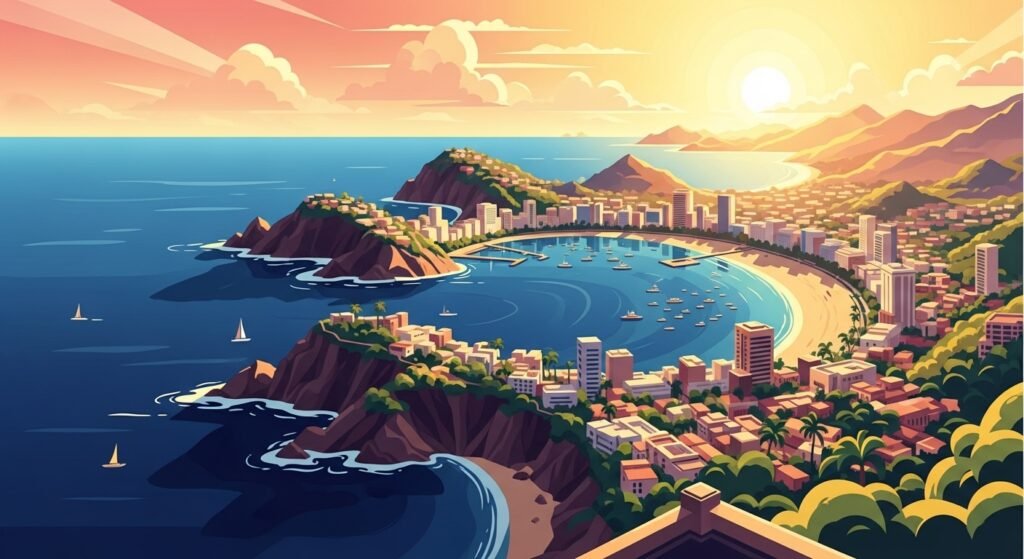
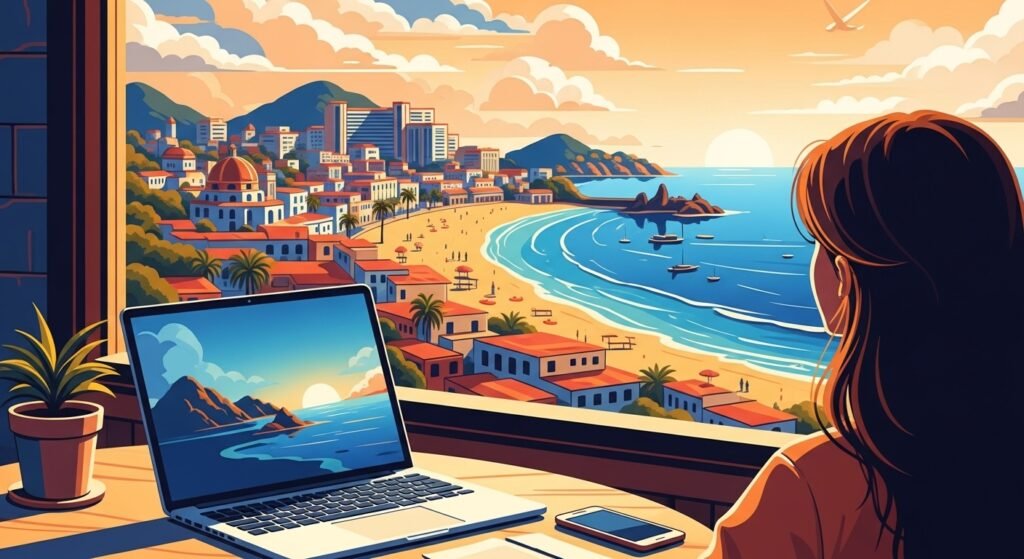
Acapulco is built around one of the most spectacular natural harbors in the Americas.
A massive curved bay, surrounded by steep hills, where the city climbs upward like a tropical amphitheater.
From above, the view is unreal.
Resorts and high-rises hugging the shoreline.
Boats floating in calm blue water.
And mountains rising behind it all like a wall.
But what makes Acapulco so fascinating… is that it doesn’t feel like a city designed for tourism.
It feels like a city that was taken over by it.
Because Acapulco has lived multiple lives.
And each one left scars… and legends.
[2. GEOGRAPHY AND NATURE]
Acapulco’s geography is the reason it exists.
The bay is naturally protected, shaped like a giant crescent, making it ideal for ships and trade.
The hills surrounding it are covered in tropical greenery, and they rise so steeply that many homes and hotels are built directly into the slopes.
But Acapulco is not just beaches.
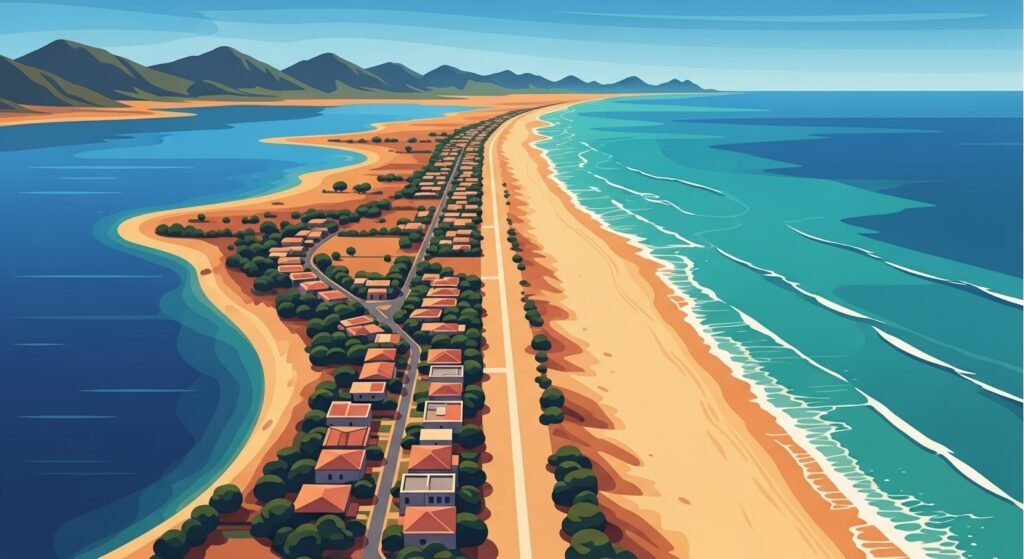
Just outside the main bay you’ll find powerful open ocean waves, lagoons, mangroves, and stretches of coastline that feel wild and untamed.
Places like Pie de la Cuesta, famous for its sunsets… and for waves so aggressive they can look almost violent.
And the climate here is pure tropical intensity.
Hot temperatures year-round.
High humidity.
A rainy season that can flood streets in hours.
And hurricane risk that never fully disappears.
Acapulco may look like paradise…
But nature here always reminds you who’s in control.
[3. THE MANILA GALLEON ERA — ACAPULCO’S GLOBAL IMPORTANCE]
Most people think Acapulco’s story begins with beaches and hotels.
It doesn’t.
Acapulco was famous long before tourists arrived.
Because centuries ago… it was one of the most important ports in the world.
During the Spanish Empire, Acapulco became the Pacific endpoint of a massive trade route connecting:
Mexico… the Philippines… and Asia.
This was the era of the Manila Galleons.
Enormous ships crossing the Pacific Ocean, carrying silk, porcelain, spices, and luxury goods from Asia…
And returning with Mexican silver.
This wasn’t local trade.
This was global trade on an empire scale.
Acapulco became a gateway between continents — a place where the wealth of Asia and the riches of the Americas collided.
For more than 250 years, this bay wasn’t just beautiful.
It was powerful.
[4. FORT SAN DIEGO AND THE AGE OF PIRATES]
And when wealth flows through a city…
danger follows.
Acapulco became a target.
Pirates, privateers, and rival empires wanted a piece of the treasure passing through this harbor.
So Spain built defenses.
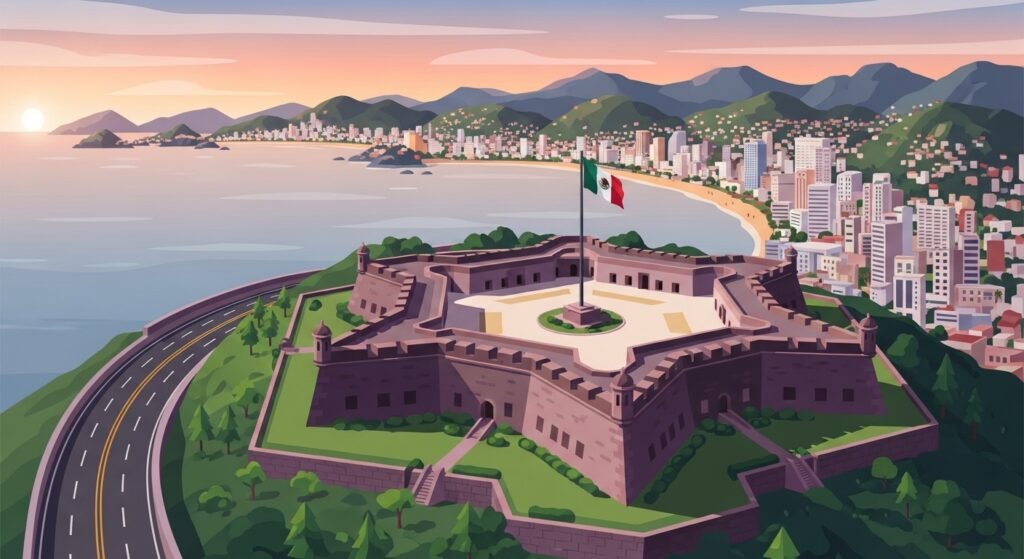
The most famous was Fort San Diego, a star-shaped fortress designed to protect the city and its trade routes.
Even today, it stands as proof that Acapulco’s history isn’t just glamorous.
It was strategic.
Militarized.
And at times… brutal.
Acapulco wasn’t born as a tourist city.
It was born as a global prize.
[5. THE GOLDEN AGE — HOLLYWOOD AND JETSET ERA]
Then, centuries later, Acapulco was reborn.
And this time, it wasn’t silver and silk that made it famous.
It was fame itself.
In the mid-1900s, Acapulco became the most glamorous resort destination in the Americas.
Hollywood celebrities arrived.
Millionaires built villas in the hills.
Luxury hotels lined the shoreline.
The city became a symbol of tropical wealth.
A place where the world’s elite came to escape reality.
For decades, Acapulco wasn’t just popular.
It was iconic.
The kind of destination where a single photograph could define an era.
If Cancun represents modern tourism…
Acapulco represents the original dream.
A paradise with history behind it.
And a reputation that became larger than the city itself.
[6. LA QUEBRADA CLIFF DIVERS]
And if there is one image that truly defines Acapulco…
it’s this.
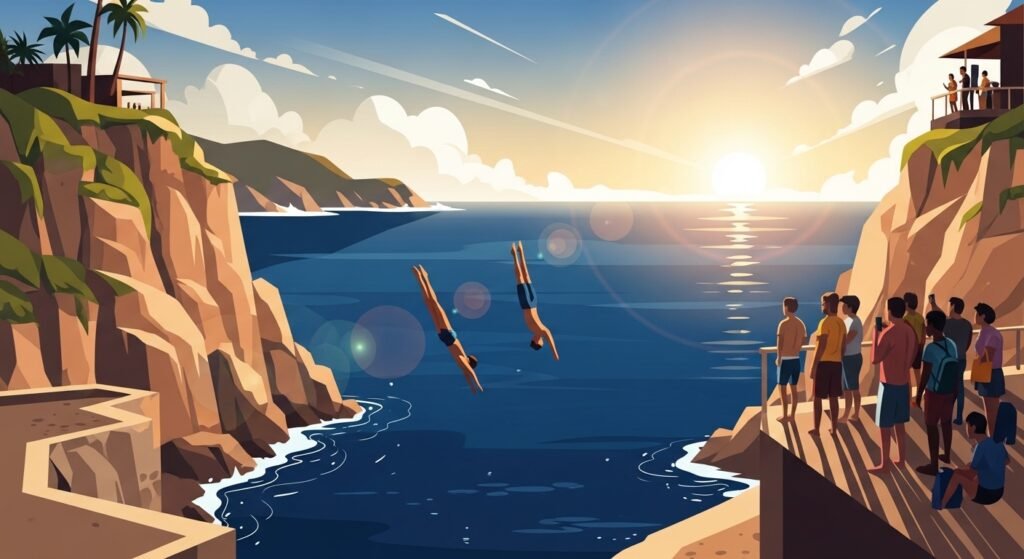
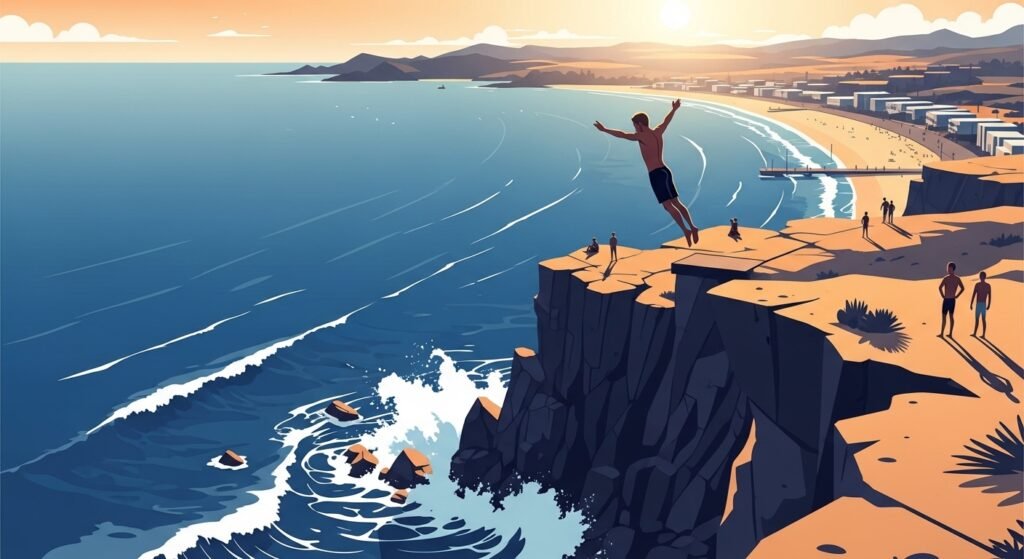
At La Quebrada, divers climb high above the ocean, standing on cliffs that rise over 30 meters into the sky.
Then they jump.
Not into a wide pool.
Not into a safe landing zone.
But into a narrow ocean cove surrounded by jagged rock walls.
And they have to time it perfectly.
Because if the wave doesn’t arrive at the right second…
there’s not enough water to survive.
The cliff divers of Acapulco are not just performers.
They are living symbols of the city.
Because Acapulco has always been about risk.
A beautiful place…
balanced on the edge.
[7. CULTURE, LIFESTYLE AND CUISINE]
Acapulco isn’t like a resort city that feels manufactured.
It’s loud.
Crowded.
Alive.
It has street markets, coastal neighborhoods, music, chaos, and energy that never fully shuts off.
The culture here is shaped by Guerrero — a region known for strong identity, deep tradition, and a raw authenticity that tourism never fully erased.
And the food is exactly what you’d expect from a Pacific city.
Seafood everywhere.
Fresh ceviche.
Shrimp cocktails served cold in plastic cups.
Grilled fish, seasoned hard and cooked over fire.
Street tacos.
Tropical fruit.
And drinks made with lime, chili, and salt that hit like a punch in the heat.
Acapulco isn’t the kind of place where food is just part of the vacation.
It’s part of the city’s personality.
[8. ECONOMY AND TOURISM]
For decades, Acapulco’s economy has revolved around one thing:
tourism.
Hotels, restaurants, nightlife, real estate, transport, beach vendors — everything connects back to visitors.
And for much of the 20th century, Acapulco wasn’t just one of Mexico’s biggest tourist cities…
It was one of the biggest tourist cities in the world.
But when a city depends heavily on tourism…
its success becomes fragile.
And Acapulco would soon learn that the hard way.
[9. RISE, DECLINE AND REINVENTION]
Acapulco’s story is dramatic because it isn’t a straight climb upward.
It’s a rise…
followed by a fall.
As time passed, new resort cities began to dominate international tourism.
Cancun. Los Cabos. Puerto Vallarta.
Places built with modern infrastructure and cleaner reputations.
Meanwhile, Acapulco struggled with growing inequality, crime, and instability.
Tourism declined.
International attention faded.
And the city that once represented luxury began to represent something darker.
But Acapulco never disappeared.
It remained a destination for millions of Mexican travelers.
And beneath the headlines, the city continued to exist as it always had:
beautiful…
complicated…
and impossible to erase.
Acapulco became a symbol of contradiction.
A paradise that could still feel dangerous.
A city that looked like a dream…
while fighting to stay alive.
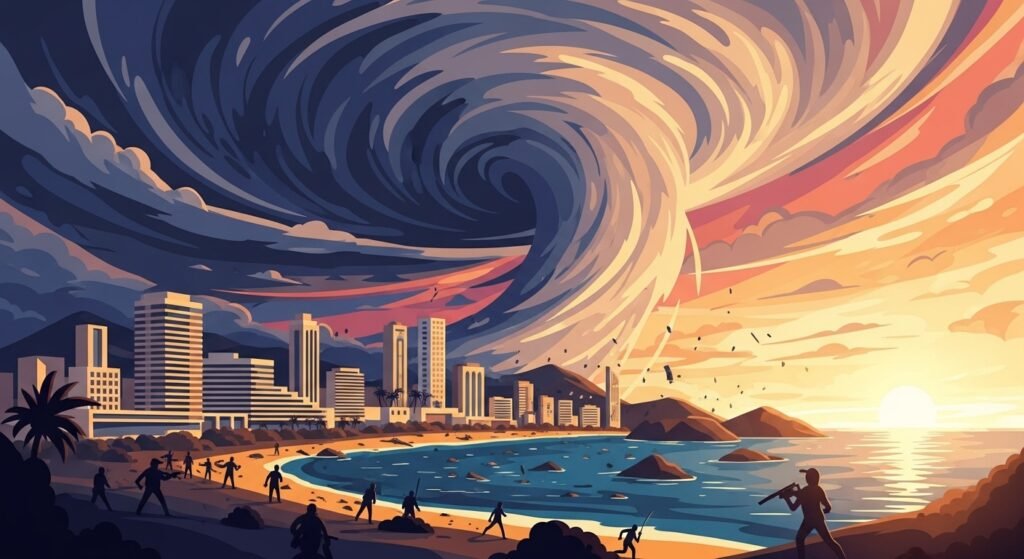
[10. HURRICANE OTIS (2023)]
Then came the disaster that shocked the world.
In 2023, Hurricane Otis rapidly intensified into a powerful storm and slammed into Acapulco with devastating force.
And what made it terrifying wasn’t just the destruction.
It was how fast it happened.
The storm strengthened so quickly that many people had little time to prepare.
Hotels were torn apart.
Roads collapsed.
Infrastructure failed.
Entire neighborhoods were damaged.
For a city already struggling, Otis felt like the final blow.
But it also became a turning point.
Because after Otis, Acapulco was forced into a new chapter.
Not just survival.
Rebuilding.
Reinvention.
And a fight to reclaim the future.
[11. DISTRICTS AND KEY PLACES]
Acapulco is often divided into three main zones — and each one represents a different era of the city.
Traditional Acapulco is the older heart of the city, where the history lives: Fort San Diego, local markets, and neighborhoods that existed long before luxury tourism.
Acapulco Dorado, the Golden Zone, is where the classic resort era peaked — the beaches, nightlife, and hotels that defined the city’s international fame.
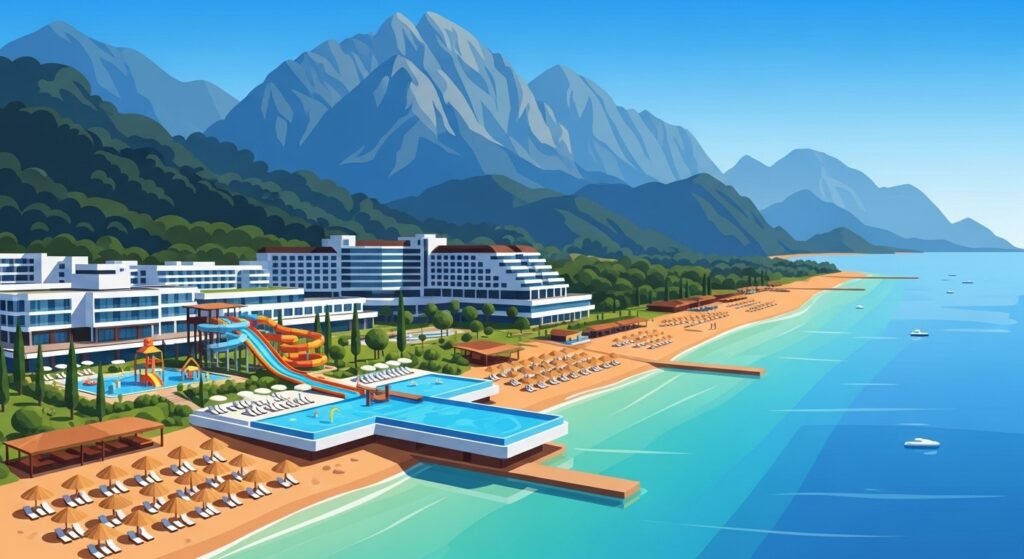
And Acapulco Diamante, the Diamond Zone, is the newer upscale expansion, built for modern tourism, luxury development, and high-end resorts.
Together, these zones tell Acapulco’s story.
Not one city…
but multiple identities stacked on top of each other.
[12. CLIMATE]
Acapulco’s climate is part of the legend.
Hot and tropical almost all year.
Winters are warm and pleasant.
Summers are humid and heavy.
And during rainy season, storms can hit with overwhelming intensity.
The ocean stays warm.
The air stays thick.
And the sunsets look unreal.
But the same climate that makes Acapulco a paradise…
also makes it vulnerable.
Because in this region, hurricanes are never just a possibility.
They are part of the geography.
[13. INTERESTING FACTS]
Acapulco was once considered one of the most glamorous destinations on Earth.
The city’s name became a symbol of luxury tourism long before modern resort cities existed.
It was a key port in the Manila Galleon trade route, linking Asia and the Americas for centuries.
And the La Quebrada cliff divers remain one of the most dangerous tourist traditions in the world — a performance where timing is the difference between survival and death.
Even today, Acapulco’s bay is often described as one of the most naturally beautiful harbors in the Americas.
And that beauty… is the reason the city’s story refuses to end.
[14. SUMMARY / OUTRO]
Acapulco is not just a beach city.
It’s a legend with scars.
A city that once defined glamour.
A port that once connected continents.
A paradise that became a symbol of both beauty and chaos.
And a place that has been forced to reinvent itself again and again.
From Spanish trade empires to pirate threats…
From Hollywood luxury to modern struggle…
From cliff divers to hurricanes…
Acapulco has lived more lives than most cities ever will.
And that’s why it remains unforgettable.
Because Acapulco isn’t just a destination.
It’s a story.
A city that fell…
and refuses to stay down.
And even now, as it rebuilds…
Acapulco still stands where it always has.
On the edge of the Pacific.
Facing the ocean.
Waiting for its next chapter.