The Far East
Hong Kong
Region in China
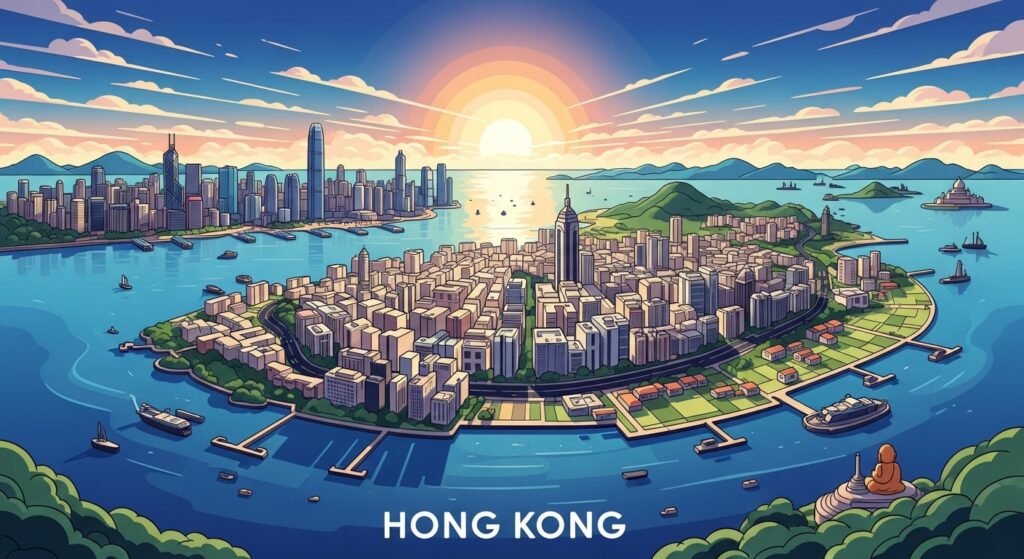
Hong Kong – The Gateway Between East and West
A global financial hub, a dense vertical metropolis, and a cultural crossroads shaped by centuries of exchange.
A global financial hub, a dense vertical metropolis and a cultural crossroads shaped by centuries of exchange.
-
Population
7.5 million
-
Area
1,106 km²
-
Official Languages
Chinese (Cantonese), English
-
Currency
Hong Kong Dollar (HKD)
-
Status
Special Administrative Region (SAR) of China
Overview
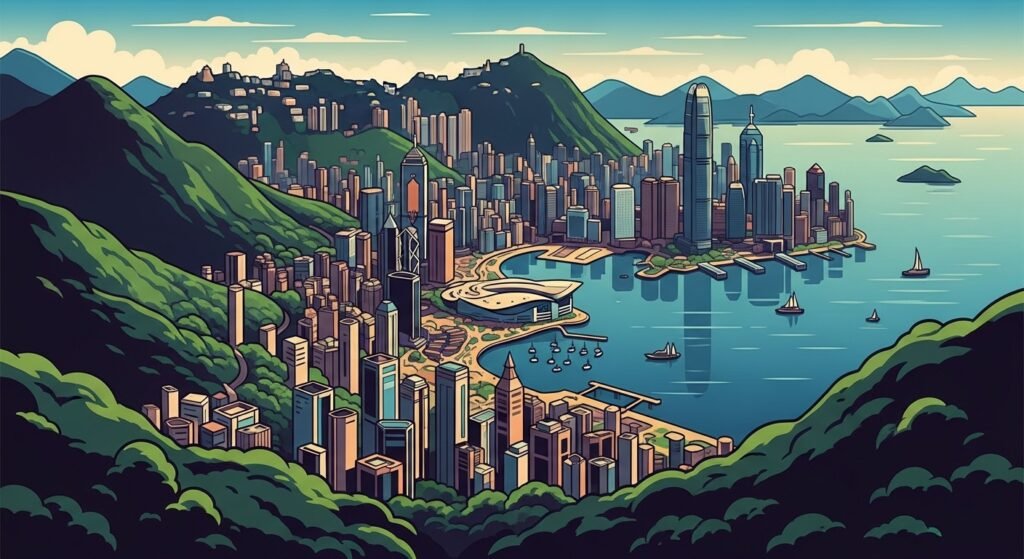
Hong Kong consists of Hong Kong Island, the Kowloon Peninsula, the New Territories, and more than 200 outlying islands. Key features include:
Steep, forested mountains
Deep natural harbors
Subtropical climate with hot, humid summers
Seasonal monsoons and occasional typhoons
Despite its urban reputation, around 40% of Hong Kong’s land is protected as country parks, offering hiking trails, beaches and wildlife habitats.
Geography and Nature
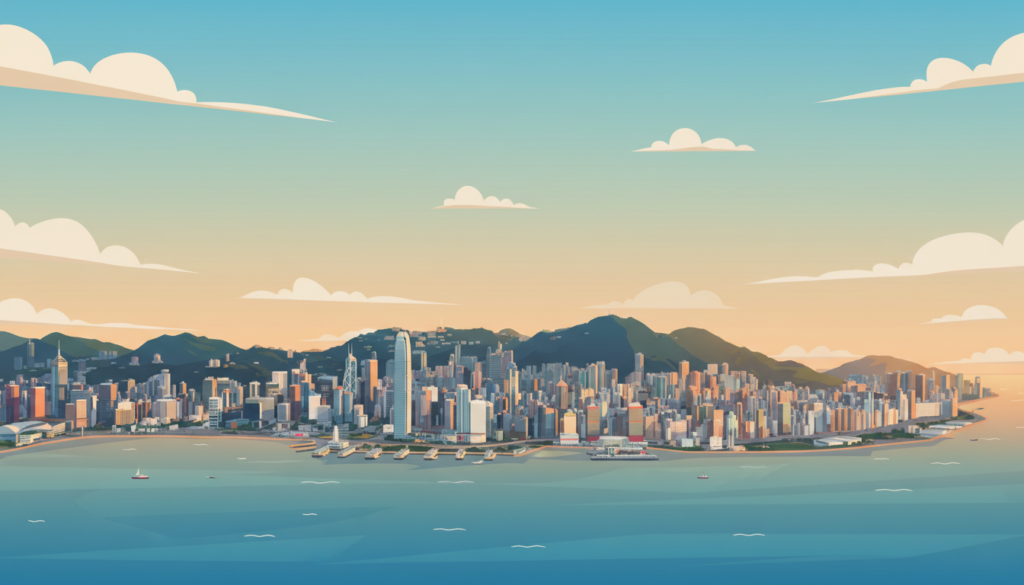
Hong Kong is one of the world’s most recognizable urban regions — a place where towering skyscrapers rise beside lush mountains and where traditional Cantonese culture blends with global influences. Known for its fast-paced energy, strategic location and unique political status, Hong Kong stands as a bridge between China and the wider world.
Historical Background
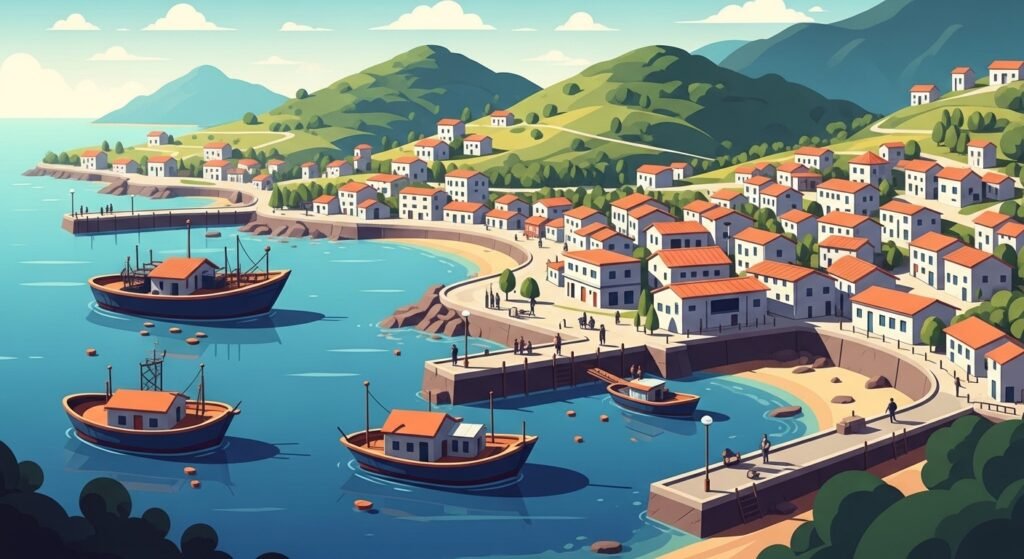
Early History. The region was sparsely populated for centuries, inhabited mainly by fishing communities and small villages.
British Colonial Era (1842–1997). Hong Kong became a British colony after the First Opium War. Over time, it developed into a major trading port and financial center.
The Handover (1997). On July 1, 1997, sovereignty returned to China under the principle of “One Country, Two Systems,” granting Hong Kong a high degree of autonomy.
Modern Era. Hong Kong continues to evolve as a global city, balancing its local identity with its role within China.
Culture and Society
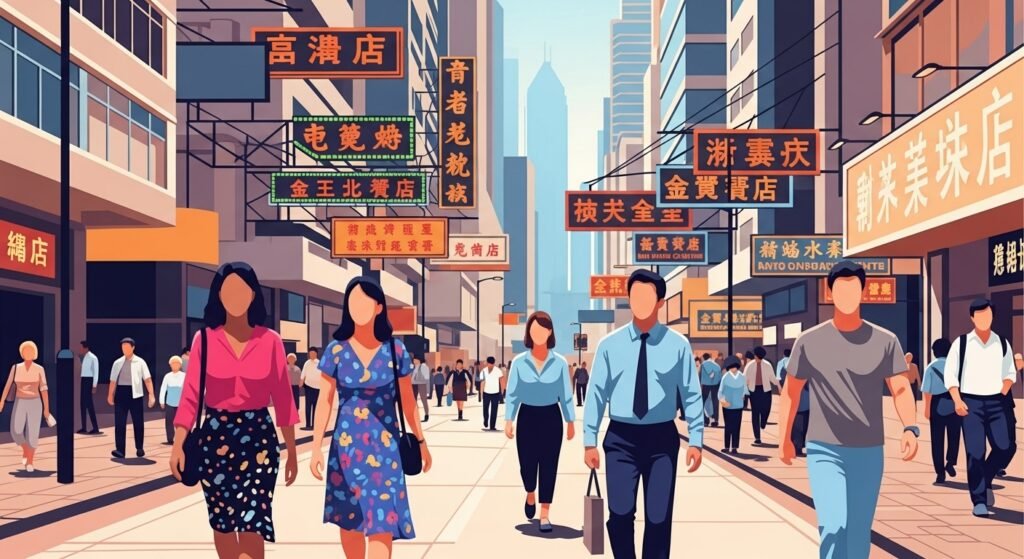
Hong Kong’s culture is a dynamic blend of Cantonese traditions and international influences.
Highlights include:
Cuisine: dim sum, seafood, street food and fusion dishes
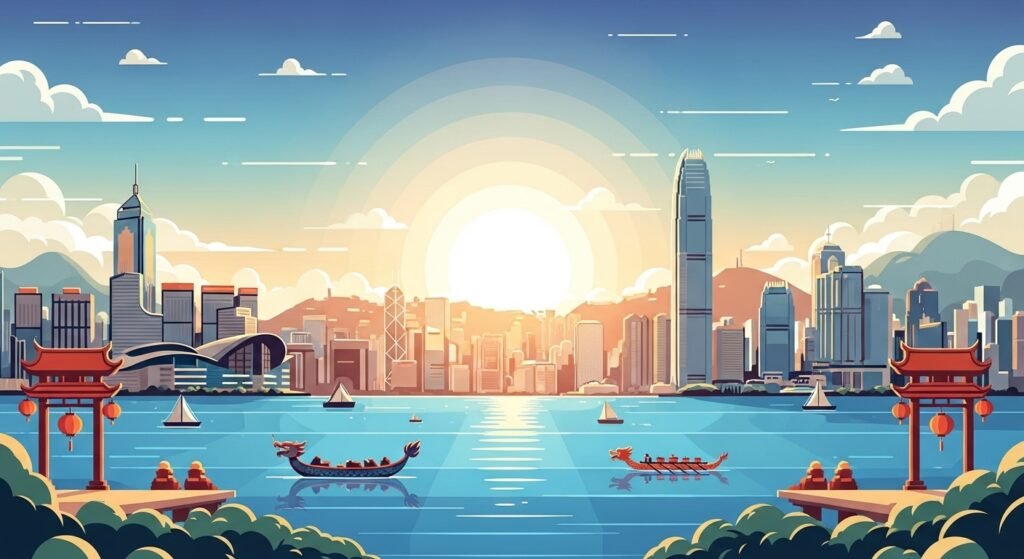
Festivals: Lunar New Year, Mid-Autumn Festival, Dragon Boat Festival
Languages: Cantonese dominates daily life; English is widely used in business
Lifestyle: fast-paced urban living mixed with strong community traditions
Values: entrepreneurship, education, family and cultural heritage
Economy and Industry
Hong Kong is one of the world’s leading financial centers.
Key sectors:
Finance and banking
Trade and logistics
Tourism
Real estate and construction
Professional services
Its deep-water port and free-market policies have made it a major gateway for global business in Asia.
Politics and Administration
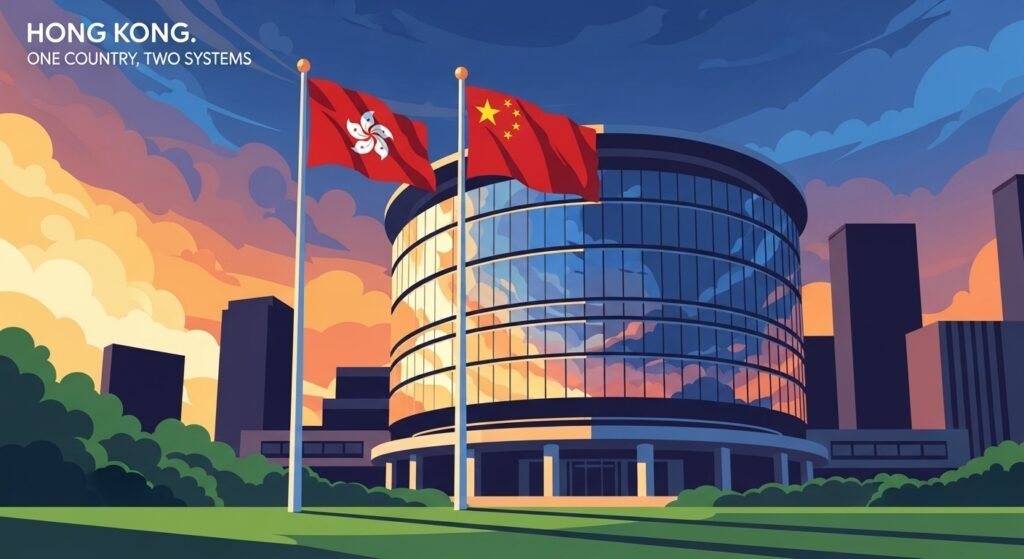
Hong Kong operates under the “One Country, Two Systems” framework.
Important elements:
Separate legal system based on common law
Local government led by the Chief Executive
Distinct immigration, customs and economic policies
Close but complex relationship with mainland China

Districts and Key Places
Hong Kong is divided into several major areas, each with its own character:
Central: financial district, skyscrapers, historic colonial buildings
Kowloon: dense urban neighborhoods, markets, nightlife
New Territories: suburban towns, rural villages, nature reserves
Lantau Island: Hong Kong International Airport, Big Buddha, hiking trails
Landmarks include Victoria Peak, Star Ferry, Tsim Sha Tsui Promenade and the skyline of Victoria Harbour.
Transport and Infrastructure
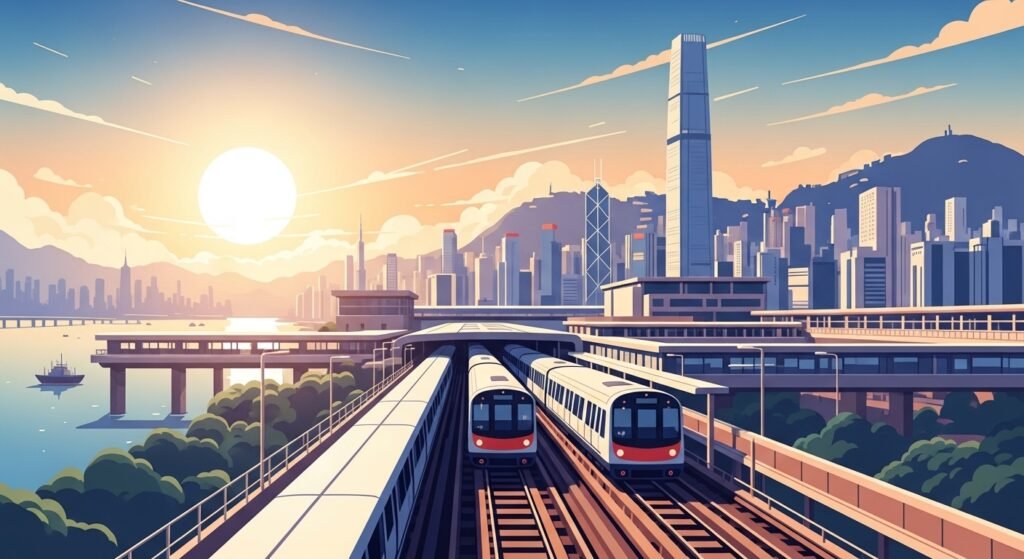
Hong Kong’s transport system is efficient, modern and highly integrated.
Key components:
MTR (Mass Transit Railway): the backbone of urban mobility
Ferries: connecting islands and waterfront districts
Hong Kong International Airport: one of the world’s busiest
Road tunnels and bridges: linking major regions
Octopus Card: a universal payment system for transport and daily purchases
Statistics and Key Indicators
Population density: among the highest in the world
GDP per capita: one of Asia’s highest
Urbanization: extremely high, with limited land
Life expectancy: among the world’s longest
Trade volume: major global hub for imports and exports
Interesting Facts
Hong Kong has more skyscrapers than any other city on Earth.
Over 90% of residents use public transport daily.
The city’s skyline is illuminated every night in the “Symphony of Lights” show.
Dim sum culture originated in the Cantonese-speaking regions, including Hong Kong.
Recommended Resources
Documentaries on Hong Kong’s history and urban development
Books on Cantonese culture and the city’s economic rise
Official tourism and cultural heritage websites
Related Regions
Explore nearby or connected areas:
Mainland China
Macau
Taiwan
Southeast Asia
East Asian economic regions
Summary
Hong Kong is a place of contrasts — a dense metropolis surrounded by nature, a Cantonese cultural heartland with global influence and a region shaped by both tradition and modernity. Its unique identity continues to evolve, making it one of the world’s most fascinating urban landscapes.
Full Story
HONG KONG — The Gateway Between East and West - Atlas World Library Script (5–6 minutes)
[INTRO]
Hong Kong is one of those places that feels almost unreal.
A city where mountains rise behind glass skyscrapers… where neon lights reflect off the sea… and where ancient traditions survive inside one of the most modern urban jungles on Earth.
This is Hong Kong — a place often described as the gateway between East and West.
A global financial powerhouse. A cultural crossroads. And one of the most densely packed cities ever built.
But what makes Hong Kong truly fascinating… is that it’s not just a city.
It’s an entire world stacked vertically.
[QUICK FACTS]
Hong Kong is home to around 7.5 million people, living within just 1,106 square kilometers. That makes it one of the most crowded urban regions on the planet.
The official languages are Chinese — mainly Cantonese — and English, and the city uses its own currency: the Hong Kong Dollar.
Politically, it holds a unique status: Hong Kong is a Special Administrative Region of China, operating under a system that makes it different from any other major city in Asia.
[1. OVERVIEW]
Hong Kong is one of the world’s most recognizable urban regions — a place where towering skyscrapers rise beside lush mountains, and where traditional Cantonese culture blends with global influences.
Known for its fast-paced energy, strategic location, and unique political status, Hong Kong stands as a bridge between China and the wider world.
But to truly understand Hong Kong, you first need to understand its geography.
Because this is where the story gets surprising.
[2. GEOGRAPHY AND NATURE]
Most people imagine Hong Kong as endless skyscrapers, crowded streets, and constant movement.
And yes — it absolutely is all of that.
But what many don’t realize is that Hong Kong is also filled with nature.
The region is made up of Hong Kong Island, the Kowloon Peninsula, the vast New Territories, and more than 200 outlying islands scattered across the sea.
Towering above it all are steep forested mountains, covered in greenery that feels more like Southeast Asia than a financial capital.
The climate here is subtropical, meaning summers are hot and humid, and monsoon rains can transform the city overnight. Every year, Hong Kong also faces typhoons — powerful storms that remind everyone that nature still has the final word.
And here’s the part that surprises most people…
Even though Hong Kong is famous for being one of the most urban places on Earth, around 40% of its land is protected as country parks.
That means within minutes, you can go from luxury shopping malls and skyscrapers… to hiking trails, quiet beaches, and misty mountain peaks.
Hong Kong isn’t just built beside nature.
It’s built inside it.
[3. HISTORICAL BACKGROUND]
To understand how Hong Kong became what it is today, we need to go back.
Long before Hong Kong became a world-famous skyline, it was mostly small fishing villages and rural settlements. For centuries, it was sparsely populated, with communities living off the sea, trading locally, and staying largely outside of global attention.
Early History
The region remained quiet and relatively isolated for centuries, shaped mainly by fishing communities and small villages.
British Colonial Era (1842–1997)
Then everything changed in the 1800s.
After the First Opium War, Hong Kong was handed over to Britain in 1842, marking the beginning of its long colonial era.
Its location was perfect — sitting on the edge of China and facing global trade routes. Over time, Hong Kong transformed into a major port, and eventually one of the world’s most important financial and commercial centers.
For more than 150 years, Hong Kong developed under British influence, creating a society that blended Chinese tradition with Western institutions, architecture, and law.
The Handover (1997)
Then came one of the most important dates in modern Asian history:
July 1st, 1997.
Hong Kong was officially handed back to China.
But it wasn’t absorbed like a normal Chinese city.
Instead, it entered a unique political arrangement known as “One Country, Two Systems.”
Modern Era
Under this framework, Hong Kong became part of China — but kept a high degree of autonomy. It maintained its own legal system, its own immigration policies, and its own economic structure.
And even today, this unusual balance continues to shape Hong Kong’s identity — and its future.
[4. CULTURE AND SOCIETY]
But Hong Kong is more than history and politics.
It’s culture.
And in Hong Kong, culture isn’t something you visit in museums.
It’s something you taste, hear, and experience in the streets every day.
Cantonese culture is at the heart of the city. The language dominates daily life, filling markets, restaurants, and subway stations with a rhythm that feels fast, sharp, and alive.
At the same time, English remains widely used — especially in business, education, and international trade — reinforcing Hong Kong’s role as a global crossroads.
And nowhere is Hong Kong’s culture more famous than in its food.
Because this city doesn’t just eat.
It obsesses.
From legendary seafood markets to street stalls serving sizzling noodles, Hong Kong is one of the world’s great culinary capitals.
And of course… there’s dim sum.
Small dishes served in bamboo steamers, eaten slowly with tea — a tradition that reflects Hong Kong’s ability to turn even a simple meal into a social ritual.
And throughout the year, the city explodes with festivals.
Lunar New Year transforms neighborhoods into a storm of red decorations and fireworks. The Mid-Autumn Festival lights up the night with lanterns. And the Dragon Boat Festival fills the waters with racing teams paddling at full speed, driven by drums and tradition.
Hong Kong moves fast… but it never forgets where it came from.
[5. ECONOMY AND INDUSTRY]
And that same energy drives its economy.
Because Hong Kong is not just a famous city.
It is one of the most important financial centers on Earth.
Its economy is powered by banking, finance, trade, logistics, tourism, and professional services.
For decades, companies from around the world used Hong Kong as their launchpad into China — and as a bridge between East and West.
It’s a city built on speed, efficiency, and ambition.
[6. POLITICS AND ADMINISTRATION]
Hong Kong operates under the “One Country, Two Systems” framework.
This gives the region a distinct identity compared to mainland China.
It has its own legal system based on common law, a local government led by a Chief Executive, and separate customs and immigration policies.
At the same time, Hong Kong remains closely connected to China — economically, politically, and culturally — creating a relationship that is both powerful and complex.
[7. DISTRICTS AND KEY PLACES]
If you want to see Hong Kong’s personality up close, you need to explore its districts.
Because Hong Kong isn’t one single atmosphere.
It’s many worlds pressed together.
Central
In Central, you’ll find the heart of finance — skyscrapers, luxury malls, and colonial-era buildings standing like reminders of the past.
Kowloon
Across the harbor in Kowloon, the vibe changes completely. The streets feel tighter, louder, and more chaotic — packed with markets, food stalls, neon signs, and nightlife that seems to never sleep.
New Territories
Then there’s the New Territories, where the city begins to loosen its grip. Here you’ll find suburban towns, rural villages, and nature reserves that feel a thousand miles away from the skyline.
Lantau Island
And on Lantau Island, you’ll find one of the most iconic landmarks in the region — the massive Tian Tan Buddha, often called the Big Buddha, watching silently over the landscape.
Lantau is also home to Hong Kong International Airport, one of the busiest airports on the planet.
Famous Landmarks
Landmarks like Victoria Peak, the Star Ferry, the Tsim Sha Tsui Promenade, and the skyline of Victoria Harbour have become symbols of Hong Kong itself.
[8. TRANSPORT AND INFRASTRUCTURE]
Hong Kong’s transport system is legendary.
It is fast, modern, and shockingly efficient.
The backbone of the city is the MTR, the subway system that moves millions of people every day with near-perfect precision.
Ferries connect islands and districts, including the famous Star Ferry, gliding across Victoria Harbour with skyscrapers towering on both sides.
Bridges and tunnels link the different regions together, making Hong Kong feel like a single connected machine.
And then there’s the Octopus Card — a simple payment card that works for transport, shops, and daily purchases, making the city feel frictionless.
In Hong Kong, everything is designed to keep you moving.
[9. STATISTICS AND KEY INDICATORS]
The numbers behind Hong Kong are just as extreme as the skyline.
Hong Kong has one of the highest population densities in the world.
Its GDP per capita is among the highest in Asia.
Urbanization is nearly total, because land is limited — and demand is endless.
And remarkably, Hong Kong has one of the longest life expectancies on Earth.
It is also one of the world’s major trade hubs, with massive import and export volume flowing through its ports and financial networks.
[10. INTERESTING FACTS]
And now comes the part that makes Hong Kong feel futuristic.
Hong Kong has more skyscrapers than any other city in the world.
More than New York. More than Dubai.
More than anywhere.
Over 90% of residents use public transport daily, making it one of the most transit-dependent societies on Earth.
And every night, the city lights up in a show called “Symphony of Lights”, where the skyline itself becomes a glowing performance across Victoria Harbour.
It’s one of those sights that feels like it belongs in a science fiction movie.
And yet… it’s real.
[11. RECOMMENDED RESOURCES]
If you want to explore Hong Kong deeper, there are plenty of documentaries on its urban development and political history.
Books about Cantonese culture and Hong Kong’s economic rise also reveal how this city became so influential.
And official tourism and cultural heritage websites offer great insights into the traditions that still shape daily life.
[12. RELATED REGIONS]
To understand Hong Kong’s role in Asia, it also helps to explore the surrounding regions.
Places like Mainland China, Macau, Taiwan, and the broader world of Southeast Asia are deeply connected to Hong Kong through trade, history, and migration.
Hong Kong isn’t isolated.
It’s a node in a much larger global network.
[13. SUMMARY / OUTRO]
Hong Kong is a place of contradictions.
A dense metropolis surrounded by nature.
A Cantonese cultural heartland shaped by global influence.
A city built on trade, ambition, and speed — but rooted in tradition.
It is modern, historic, chaotic, efficient, crowded, and breathtaking — all at the same time.
And maybe that’s why Hong Kong fascinates so many people.
Because it doesn’t feel like a normal city.
It feels like a crossroads of history… where the future is being built in real time.
Hong Kong is not just a skyline.
It’s a living experiment.
A place where East meets West — and where the world continues to collide.
And no matter how much it changes…
Hong Kong remains one of the most unique urban landscapes ever created.